I’m writing this on a Sunday morning. While I write, several agents are working in other tabs on my computer, on projects that have nothing to do with what I’m doing here.
I think that detail pretty much explains why this piece exists.
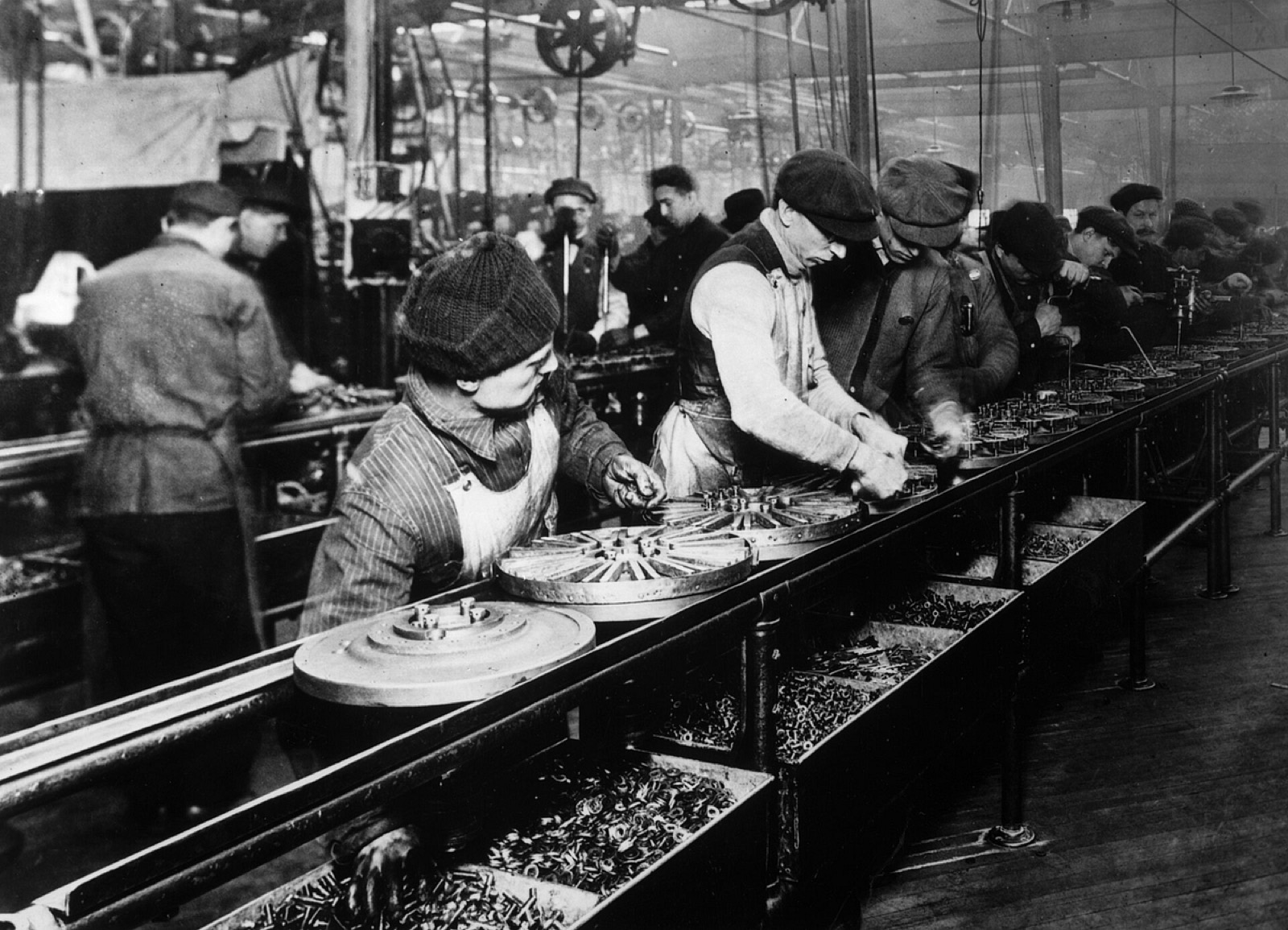
I could have started writing, closed everything else, and spent a few hours focused on this, the way I did for most of my working life. Today it feels almost irresponsible to have several agents available and not use the time I’m writing to have them advance something else. It feels like walking into a factory and finding a machine switched on, producing nothing. You look at it and think: since it’s running, why not put something on it?
I’ve noticed the change in my body too. I bounce my legs when I’m focused and when I’m anxious—I’ve done it since school—and I’ve never been able to tell from the movement which of the two it is. In the last few months, just opening Claude or ChatGPT on my work computer starts the bouncing. When I notice, I try to settle it, but it’s useless: the moment I concentrate again, the rhythm is back. Sometimes it isn’t one leg. It’s both. Machine-gunning the floor. TA TA TA TA TA TA.
For a long time my work had a different cadence. I spent more than twenty years designing interfaces and working with teams of designers, and a lot of that work lived inside a simple sequence. I spent a few hours in a file, sent something to someone else, waited on development, got it back, reviewed it.
I’m not romanticizing that era. There were bad deadlines, clients calling, files arriving late. But there were also stages nobody could speed up, no matter how much of a hurry I was in.
The voice-over and music still weren’t ready, and the video would have to wait. The copywriter was still building the texts. The designer needed until the next day to implement a new idea. The engineer said only next week. There was a physical limit that showed up as friction in building anything.
The promise
Any reflection of mine on the negative effects of working with agents has to start with an obvious fact for anyone who uses them every day: productivity goes up in a bizarre way.
Projects that would take months move in a week. Personal products that would sit for years on a list of ideas start to take shape. I can step into programming, infrastructure, SEO, analytics, or automation and get far enough to test hypotheses that, not long ago, would have meant hiring expensive specialists before I even knew whether they were worth it.
I’m still not an expert in several of those areas. What changed is how much territory I can wander into before I need human help.
For someone who likes making things, that pleasure is hard to describe without sounding like exaggeration. An idea that shows up over coffee can have a first version the same day.
What interests me here is what I did with the time I supposedly saved.
If something that used to take a day was done in a few hours, space opened up to start something else. When that accelerated too, a third appeared. Little by little, productivity stopped being a way to finish the work faster and started increasing how much work it seemed reasonable to do.
Xingqi Maggie Ye and Aruna Ranganathan, researchers at Berkeley, spent eight months observing a tech company with about two hundred employees. What they saw was people taking on more roles, working in intervals that used to be breaks, and leaving several AI processes running at once. A lot of that happened voluntarily. The new capacity made more things possible, and people filled the space.
It’s simple. The agent finishes fast. So you open another one.
Six tabs
I never know when reasonable use of agents turns into a small operations center. It happens gradually.
I put one agent on investigating SEO for a product. Since it will take a few minutes, I ask another to fix a bug. I remember I have the scope of a new agency project to review and start a third conversation. There’s still a header image to produce and a site in development. None of those decisions, alone, feels excessive. They all feel like great productivity decisions.
After a while I have five or six pieces of work happening at once, and they finish in an order I don’t control.
Each return brings the work itself, the agent’s justifications for what it did, and what’s still missing. Almost nothing arrives ready the first time. I ask for adjustments, send it to run again, and when I finish reviewing one tab the other already has something new to show me, on a subject with no relation to the last one.
Sophie Leroy studied what happens when we switch tasks before we’ve disengaged from the previous one. Part of our attention stays stuck on what we left behind—a phenomenon she called attention residue—and performance on the next task drops. It’s easy to recognize in something ordinary: you read an annoying email, close the window, and try to write something else. The email is gone from the screen. From your head, not always.
Agents have built an industrial version of that problem for me. Each tab keeps a process alive without me having to think about it. The computer does that very well; my brain does nothing of the kind. When I go back to the tab, I have to reload that whole little universe: goal, earlier decisions, doubts, risks, next steps.
The feed
While the tabs work, I have a hard time waiting. I open Instagram and in two minutes I watch six Reels about six subjects that have nothing to do with one another.
Looking at that is when I realized the phone screen and the computer screen had become alike. Short items, unrelated subjects, arriving out of order, asking for a few seconds of evaluation before making room for the next one. A queue that never hits zero. My tabs work like a feed.
The difference is that I produce this feed myself. On Instagram, an algorithm decides what appears. On the computer, I triggered every item, and I’m the one who will scroll through it next. I’m the one who posts and, most of the time, the one who consumes.
Once I noticed that, I started seeing the same format in the rest of the day. I try to listen to a podcast while the agents work, to fill the idle time, and the podcast becomes another tab, interrupted as soon as some agent finishes. I make coffee listening to Brazilian politics news and shower listening to tech news. At night I play video games with the rest of the episode I didn’t finish in the morning playing over the top.
It would be unfair to blame agents for all of this. Smartphones and infinite feeds arrived first. What agents did was bring that format into a place that still resisted it: deep, continuous work. Before, I fragmented my free time and protected, more or less, the hours when I produced. Now work, rest, and distraction have the same shape.
And I’m starting to notice a specific incapacity. I have a hard time seeing anything whole.
Two hours in Figma
The other day I opened a project in Figma and started designing an interface the way I’ve done thousands of times in my life.
I spent about two hours testing possibilities, adjusting proportions, trying to resolve visual relationships that were still confused. It was demanding work and, at moments, frustrating. At some point I realized my legs were still.
I was focused and strangely calm.
When I design that way, there is continuity. One attempt informs the next. Sometimes I spend ten minutes looking at something before I understand why it’s wrong. I can follow an idea until it starts revealing its own flaws. There’s a specific pleasure in staying inside a problem long enough to see things that weren’t available at first glance.
That’s when nostalgia hit me for a time when you could dive entirely into one thing. But the corner of the feed is too hypnotic, and I go back to it.
The pleasure of making things exist
If working this way were only exhausting, I would already have written “NO AI ON SUNDAYS” on a piece of paper and stuck it to the wall.
The hard part is that I’m living one of the most creatively stimulating phases of my life. And that’s what makes the corner unbearably seductive.
There’s something almost biblical about using language to give form to things. I write a few instructions and, a little later, the thing has form: an image, a video, a tool, a piece of software that didn’t exist. I’ve always liked imagining things that could exist. For a long time, most of those ideas quickly ran into restrictions that were anything but poetic: budget, team, technical knowledge, weeks available on the schedule.
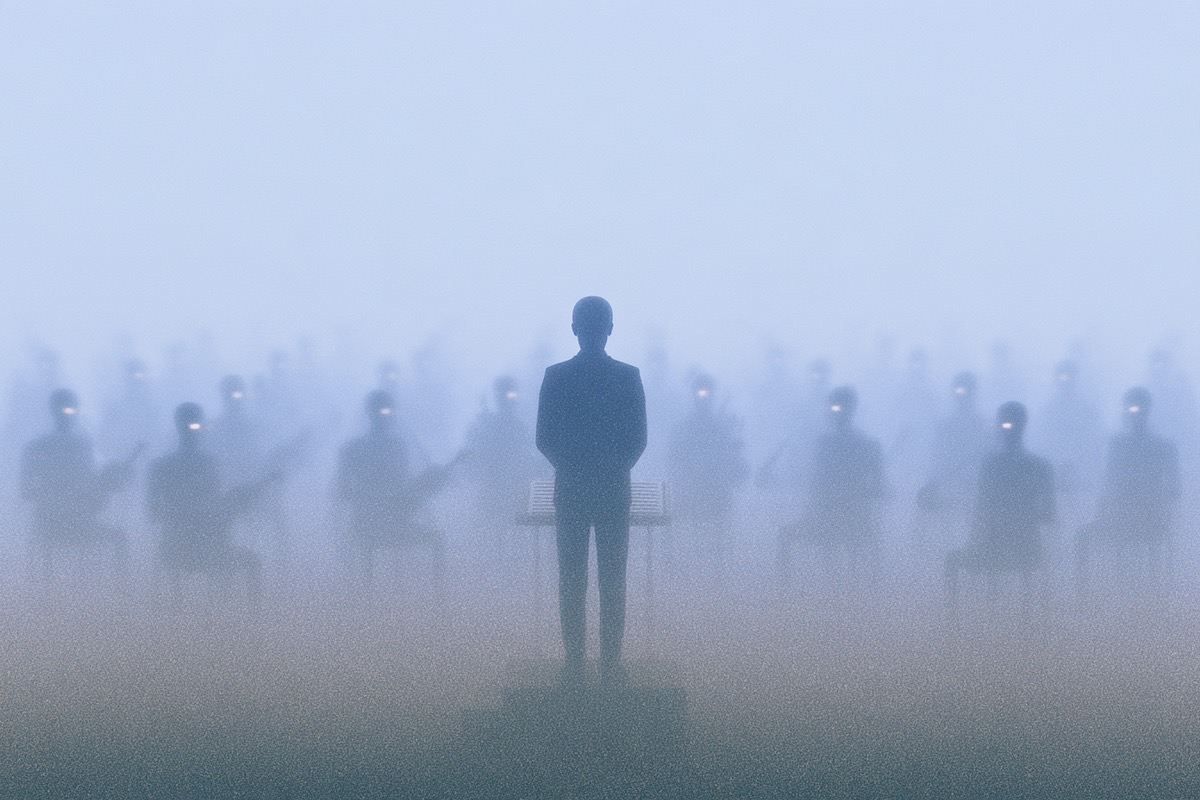
The image that shows up most often in my head is conducting an orchestra. The conductor doesn’t play any instrument. Each musician has only their own part on the stand, and he is the only one with the full score. I don’t need to play every instrument, but I need to know where we’re trying to go, notice when something is off, ask for another interpretation, cut excesses, and sometimes accept that my initial idea was wrong.
Shared authorship doesn’t bother me. After twenty years working with other designers, it would be strange to discover now a romantic attachment to the solitary artist. Much of the best work I’ve done came from mixed repertoires, uncomfortable criticism, and other people’s ideas that were better than mine.
What changed radically is how many experiments I can run. I can build something just to find out it doesn’t work. I can investigate a topic because I got curious and discover it’s far more complex than it looked. Many of those projects will end up forgotten in a folder, like lab experiments that didn’t pan out. I don’t consider the time wasted. I thought, built, saw where it broke, and learned something. For me it’s a new kind of entertainment.
But when I reread it, “entertainment” starts to feel like the wrong word. If building has become entertainment and entertainment has become another tab, it gets hard to know at what point in the day I’m resting.

A factory that never closes
I’m watching a series at night with my wife. She gets up to organize something. So do I: I open the computer to organize something else.
I don’t have to abandon the series. I leave a solid instruction for an agent, close the screen, and get back to the couch before she does. While I sleep, something will be moving forward.
From a productivity point of view, it’s the dream.
My father always said that while some sleep, others work.
At the time it was a warning. Today it sounds like a product description.
And there’s always something. The limit of what an agent can do for me stopped being budget or time and became my willingness to create new things.
The other day I decided it would be nicer to have my own interface bringing together analytics for my sites than to keep using Google Analytics, whose UI has always felt like a disproportionate punishment for the simple wish to know how many people visited a site. A few years ago I would have thought that and moved on with my life.
Now I can start.
And I did start, at ten at night, with no client asking, no deadline, no urgent problem being solved. The existence of cheap execution capacity turned a vague preference into a project.
Most conversations about AI ask how much time we save on tasks we already did. I’ve been more interested in the tasks that come into existence because they got cheap. A personal analytics interface nobody needed—apparently not even me—is one of them.
There’s an important difference from the technologies that invaded our free time before. Email brought work into our homes. Slack and WhatsApp let other people reach us at hours that used to have some social protection. In both cases, someone came to us.
The agent could sit forever motionless. I’m the one who goes looking for it.
And it offers no help for me to stop. It doesn’t get tired at six, doesn’t find it strange to receive a task on Saturday, didn’t have a hard week and doesn’t have kids waking up early. It sits there, always available, waiting for me to think of something else.
But look: for the last thirteen years I’ve directed designers and never asked any of them to start a new project at ten at night, much less with no client and no deadline, just because I had a random idea. There’s another person on the other side, with desires different from mine, and that demands respect and tolerance for what’s different.
Only now do I realize that person was protecting two nights—theirs and mine. With nobody on the other side, the absurd request comes from me and is accepted by me. The agent works through the night and loses nothing by it. The next morning, the one who opens the computer before coffee to review what was done is me.
The guilt of tokens
The most embarrassing part of all this is what I feel when the week ends and I notice I didn’t use the full limit of some tool.
Tokens left over. Obviously, an irresponsibility.
Writing it makes the behavior more absurd than feeling it. Nobody is going to confiscate the leftover tokens as punishment for low performance. Even so, a part of my head looks at that remaining capacity as something that could have been used. I could have done one more research pass, left an agent reviewing something overnight, tested that idea from Tuesday.
A limit created to restrict consumption started functioning as a goal.
The judge
At the end of a day like that, the last thing left with any energy is judgment. And it’s the first thing I start to outsource. When I get impatient with a decision, I ask another model to review the first one’s work. It works most of the time, and I’m sure errors are getting through without my knowing which ones.
The promise was that the machine would execute and the human would judge. When I compared this work to conducting an orchestra, I was thinking about the pleasure. The comparison has a crueler side. If the machine took the instruments, what’s left for me is hearing the whole piece—the only thing that justifies the conductor being in the room. And that’s exactly the capacity the feed corrodes. When I get tired of trying to hear the whole, I ask one of the musicians to conduct in my place.
Those two hours in Figma may have been the only ones in the week when I actually did the work that was left to me.
The seventh day
“Use less AI” seems about as interesting to me as recommending in 2000 that someone use less internet. It treats a symptom and ignores the transformation.
The more serious version of that argument is to reinstall friction on purpose—things like a cutoff time or days without agents. It’s stronger because it doesn’t ask me to give up the capacity, only to put back by hand the brakes that expensive execution used to give me for free. And even so it trips on a detail. Those brakes worked because they didn’t depend on me. The designer took time because that’s how long it took. The engineer would look next week because they had other things to do. A limit I impose myself has to win, every night, against the question of why leave the machine idle.
I’m involved in building a Bible app, and Genesis became the placeholder on some screens. After so many hours adjusting the Bible reader interface, one passage started to feel less provisional.
After six days of creating, God looks at everything he made, finds it good, and rests on the seventh. It’s the first time the text speaks of rest, and the one who rests is the only character with no reason to get tired. What he does on the seventh day is declare the work sufficiently done to be left in peace.
And before stopping, he looks at everything. He sees the work whole.
Maybe that’s what’s missing, more than a brake. For a long time, my tiredness and other people’s decided for me where the day ended. The machine doesn’t tire, and so it decides nothing. What’s left is a criterion of sufficiency, and it only exists for whoever can look at the whole and recognize that enough is already done. This is where the problem closes on itself. To stop, I need to see the whole work. To see the whole work, I need to have stopped.
The first six days come naturally. On the seventh, I rest like a repeat offender: promising that next week will be different.
Sunday
When I finish this piece, I realize I looked at the other tabs several times.
It would be nice to say I resisted. But I didn’t.
One of the agents had finished. I read the result, found a problem, wrote another instruction, and came back here. At some point I had an idea for something else I could set running afterward. That happened while I was writing about the problem of doing exactly that, which at least saved me the trouble of looking for an image for the ending.
I don’t want to go back to how I worked before. I have more freedom to create than I’ve ever had, and it’s hard to imagine giving that up voluntarily.
I only suspect we were too quick to treat every extra capacity as freed time. To me it looks more like a huge increase in the number of doors I can open. Being able to open ten doesn’t mean having attention to walk properly through any of them.
We’ll probably have much more autonomous agents in the coming years. I’ll use several. Probably more than would be wise.
The part I still don’t know how to solve is what happens on this side.
How do you live with a team that never sleeps without gradually starting to live as if you didn’t need to sleep either?
I’ve gone back and forth to this piece many times. It’s already seven on Sunday evening, and I have three agents waiting for me. Did they do everything right?
Readings that informed this piece
- Sophie Leroy — Why is it so hard to do my work? The challenge of attention residue when switching between work tasks
Two experiments on what happens to attention when we switch from one task to another before finishing the previous one. The concept of attention residue helps explain why working with several agents at once is so tiring. - Xingqi Maggie Ye and Aruna Ranganathan — research on AI and work intensification
An eight-month ethnography at a tech company with about two hundred employees, with observations on scope expansion, work filling breaks, and multiple AI processes running in parallel. The research is still ongoing, which is worth keeping in mind when interpreting the results.