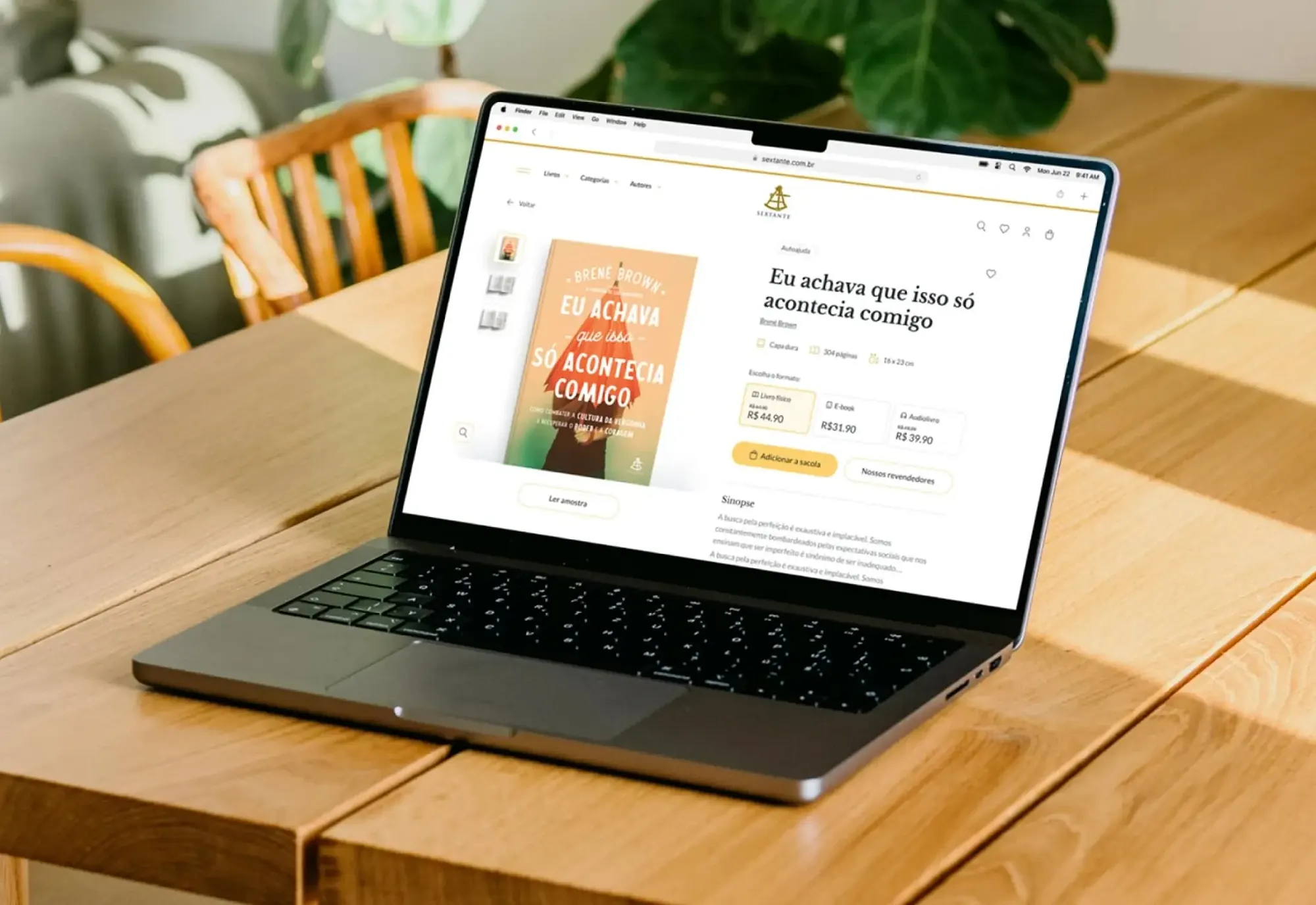
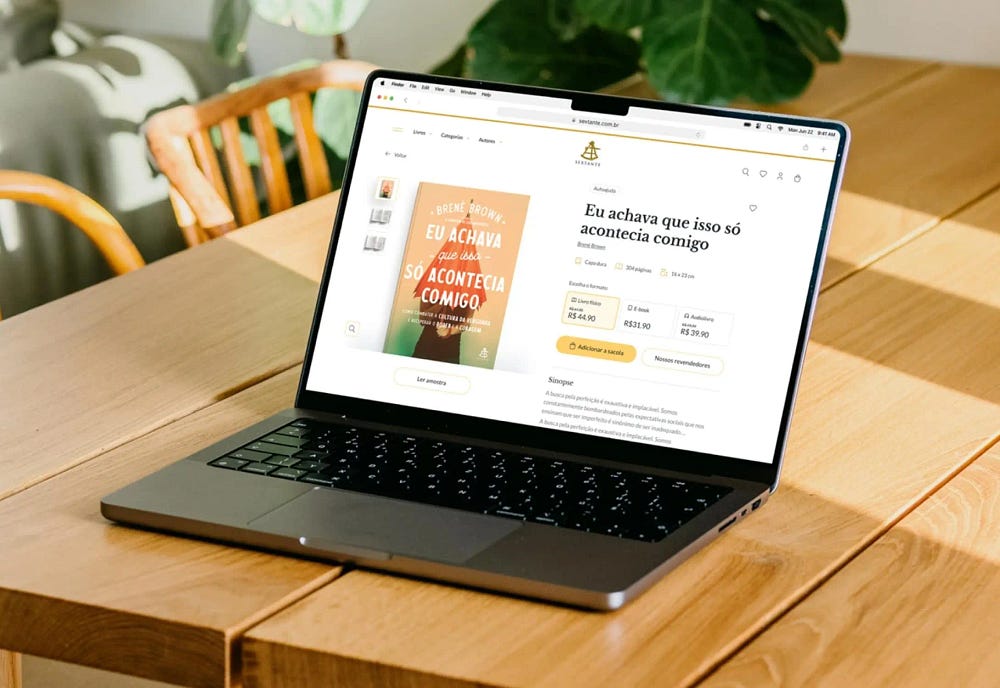
Client: Sextante Publishing House
Project: Complete digital transformation, Website, Custom CMS, E-commerce infrastructure
Year: 2024
Twenty years of respected catalog, time to evolve the digital infrastructure
In 2024, Sextante Publishing House faced a paradox that many established companies know well: two decades building one of the most respected catalogs of personal development and spirituality books in Brazil, but with digital infrastructure that needed to evolve to match the brand’s ambition.
The publisher sought more operational agility. Every simple update (changing a banner, highlighting a release, adjusting a description) required processes that made changes slow. The mobile experience needed to better reflect the brand’s sophistication. Available metrics didn’t offer the clarity necessary for strategic decisions. And managing the catalog required manual processes that consumed the team’s precious time.
And the biggest challenge: for the first time in the publisher’s history, Sextante wanted to sell directly to readers. But the logistical complexity of operating Direct-to-Consumer sales (warehousing, fulfillment, shipping carriers, returns) threatened to postpone any digital improvements for years.
When Mariana Kaplan, Sextante’s marketing director, approached Reino Studio, she articulated a tension that defines many complex digital projects:
“We need autonomy, but we can’t lose our identity. We need flexibility, but it has to feel like Sextante.”
And she added the kicker:
“And we need this now, not two years from now when logistics are resolved.”
Vinicius Malvão and I spent weeks wracking our brains trying to understand how to solve this equation. How do you give the client a modern, functional site without waiting years for logistical infrastructure? How do you deliver operational autonomy without sacrificing design quality? The problem required rethinking the entire project architecture.
When the platform limited operational autonomy
Sextante had reached the point where its existing platform no longer kept up with the speed the business needed. The digital structure in use created friction in day-to-day operations.
Simple updates required technical intermediaries. Highlighting a bestseller on the homepage, creating a thematic list of books about anxiety, adjusting a description: basic editorial operations that should be immediate became multi-step processes. The editorial team (people who deeply understand the catalog and readers) didn’t have direct access to the tools they needed.
The mobile experience needed to evolve to better reflect how Brazilian readers access the internet. And the visual presentation didn’t express the Sextante brand’s sophistication: it lacked hierarchy, variety in content presentation, and a more distinctive visual identity.
The difference between selling books and having infrastructure to sell books
But the most urgent problem was strategic: Brazilian publishers traditionally operate in a B2B2C model (sell to distributors who sell to bookstores who sell to readers). Sextante had never sold directly. Their site only redirected visitors to partner retailers (Amazon, large chains), with no control over availability, pricing, or purchase experience.
Now, they wanted to change that. They wanted to build direct relationships with readers, control the experience, capture margin. But the transition to D2C in publishing involves serious complexities. Warehousing, inventory management, fulfillment, carrier integrations, interstate shipping calculations, returns processing, customer service: an entire operation Sextante had never built.
And here was the dilemma: waiting to solve all the logistics before improving the digital site meant postponing necessary improvements for years. Starting without this structure meant building e-commerce without the ability to fulfill orders.
Three layers that solve the immediate and prepare for the future
Reino’s answer was to architect a solution that solved immediate problems while preparing for future business model evolution. We divided the approach into three distinct layers.
Shopify as foundation (but for the right reason)
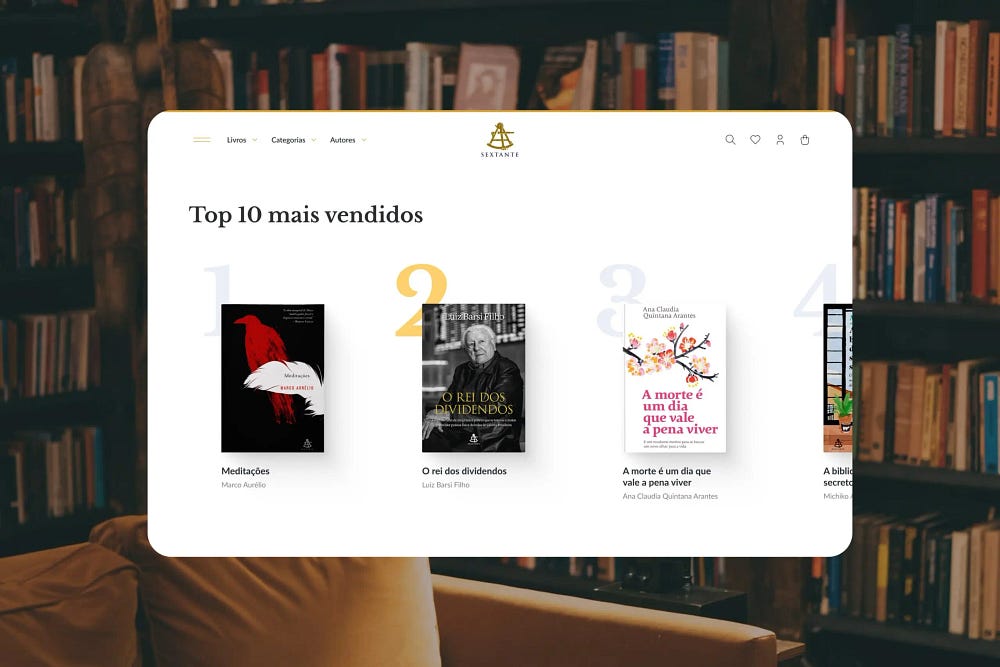
Reino chose Shopify through strategic analysis, evaluating what made sense to build versus what made sense to leverage. Instead of spending months building custom e-commerce from scratch (creating technical debt and committing resources Sextante didn’t have), we leveraged robust infrastructure that already solves complex problems: payment processing, security, checkout, order management.
This freed up energy to focus on what truly differentiates Sextante: the editorial experience and brand identity.
But the bigger strategic move was this: we built the complete e-commerce infrastructure, tested it thoroughly, but launched the site with purchases disabled.
Let me repeat that because it’s counterintuitive: we spent time and effort building fully functional e-commerce, and then… didn’t activate it.
Why? Because this allows Sextante to launch a modern site now, gain operational autonomy now, improve the reader experience now. And when the operations team solves warehousing and fulfillment challenges (in 6 months, 1 year, whenever ready), the marketing team activates direct sales with a configuration change. No additional development. No site rebuild. No blocking progress.
This represents business consulting integrated into product design. Understanding that good platform architecture unlocks business strategy.
Real autonomy without destroying design over time
The second layer was building a custom content management system on top of Shopify that solved the project’s fundamental tension: how do you give real autonomy to the Sextante team without the site degrading into a visual Frankenstein over time?
Because that’s what happens in 90% of cases. Client asks for “total control.” Agency delivers WordPress with Elementor or some page builder. Six months later, the site looks like Geocities 1998 because people without design training are making layout, typography, and visual hierarchy decisions.
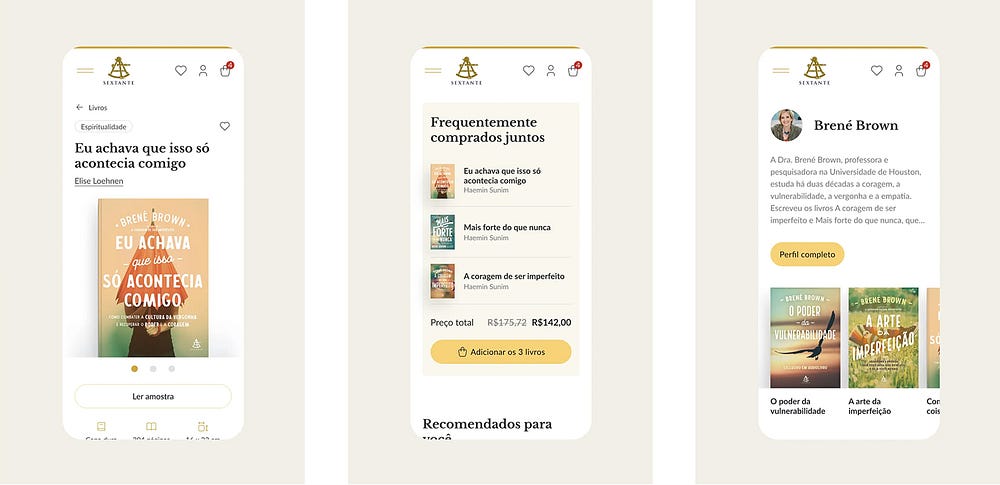
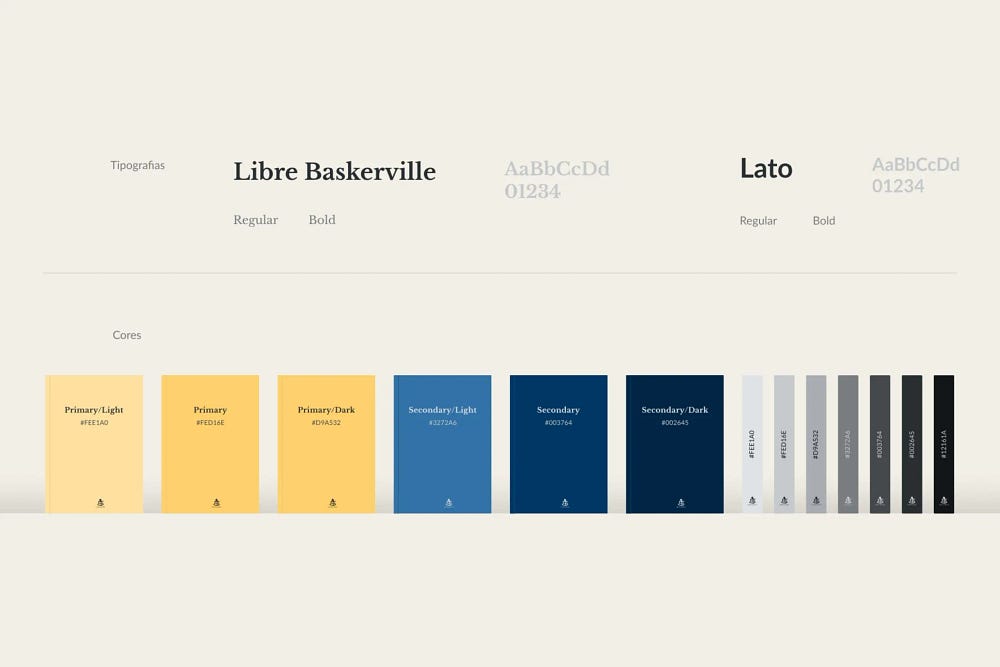
Reino’s solution was structured flexibility: we created pre-designed content modules (featured carousels, thematic lists, category showcases, author highlights, event calendars, social media integration). The editorial team can populate these modules, reorganize them, schedule publications, bulk import catalog data. But they can’t break the responsive grid, they can’t use Comic Sans, they can’t destroy the visual hierarchy.
The homepage debate (and why we said no)
This created tension during development. Sextante initially expected “complete control” over the homepage, the ability to add any type of content, in any format, anywhere.
Reino pushed back. We argued that the homepage is the brand’s entry point, the primary conversion driver. Allowing arbitrary layout changes would risk visual incoherence, degraded performance, and gradual deterioration of the design investment we were making.
The compromise: Sextante controls what appears (which books, authors, categories), when it appears (content scheduling), and the order of sections. But they can’t create new layout types without Reino involvement. Autonomy within design system guardrails.
This approach proved correct. The Sextante team gained the operational independence they needed (they can highlight releases, create thematic lists, update the catalog) but the site maintains visual integrity months after launch.
When atmosphere matters as much as conversion
The third layer was the most subtle, but perhaps most important: treating the interface as a cultural artifact that expresses Sextante’s values, beyond being a conversion tool.
Reino operates from a fundamental belief: design is language. Every visual and interaction decision makes statements about what the brand represents. For Sextante (a publisher focused on personal development, spirituality, inner peace), the digital experience couldn’t just be efficient. It had to have atmosphere. It had to respect the contemplative moment of choosing a book.
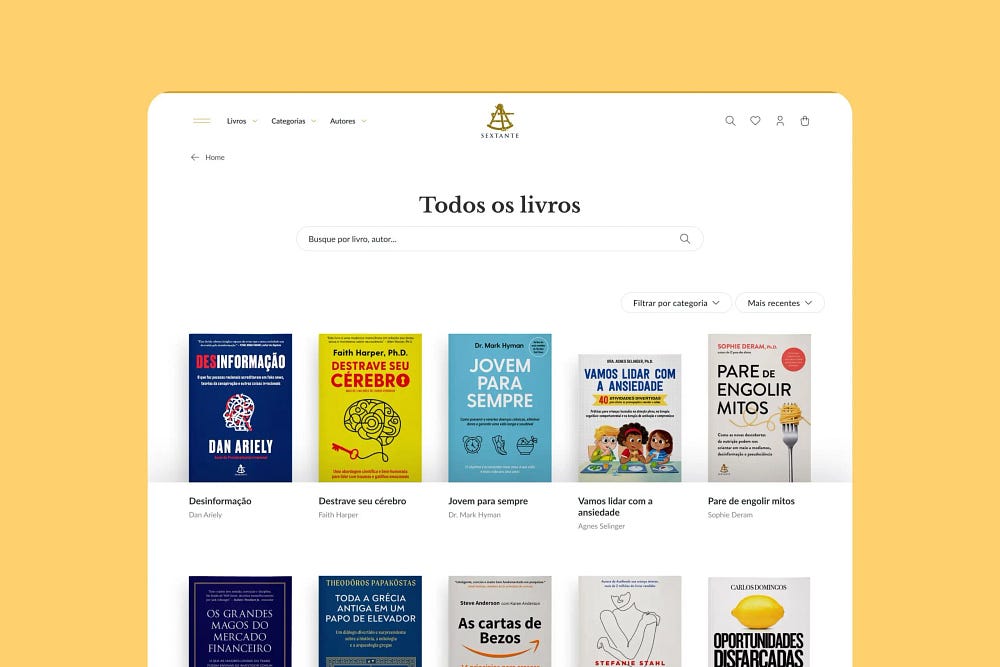
We observed how people browse books physically: they tilt their heads to scan spines on a shelf, run fingers across covers, let curiosity guide discovery. This differs from algorithmic search. It’s sensory exploration.
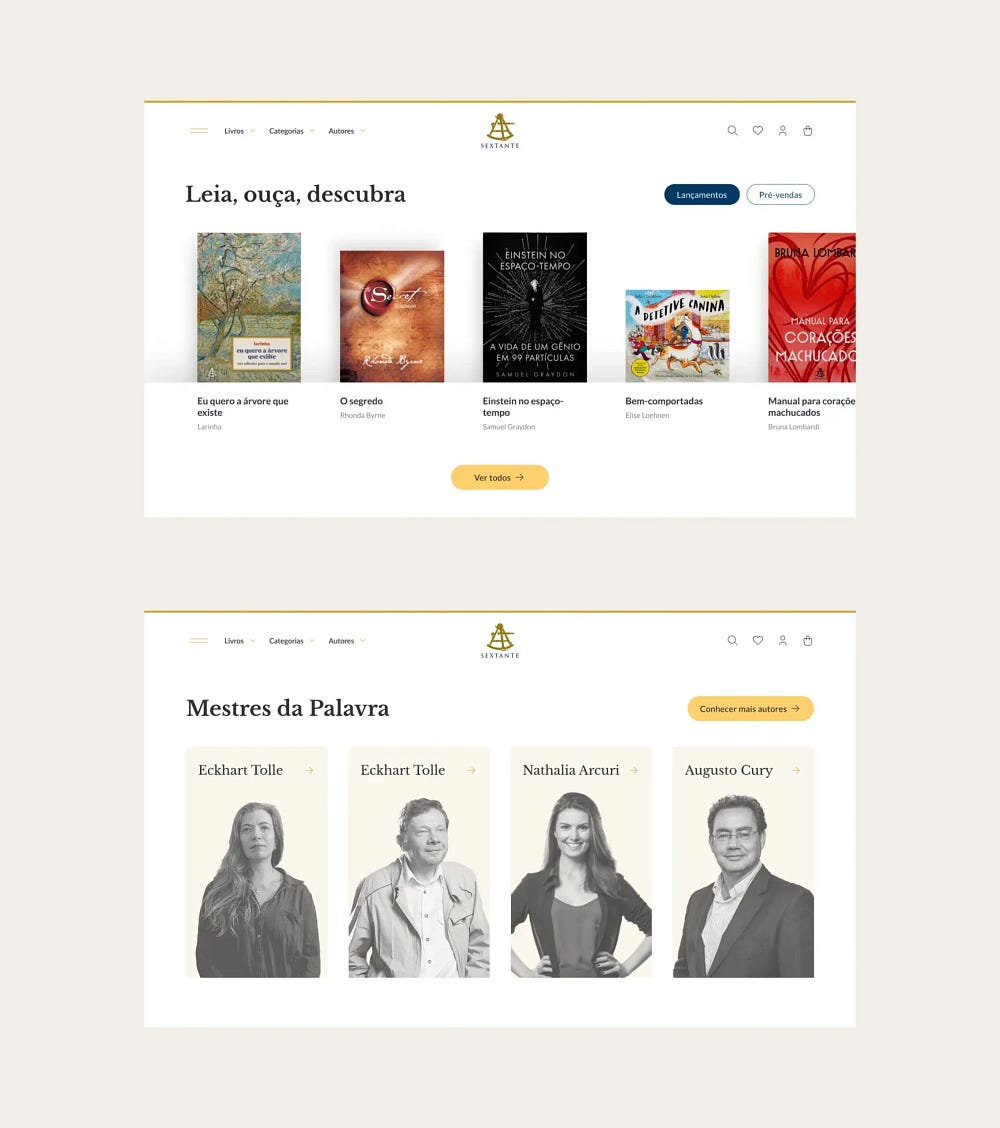
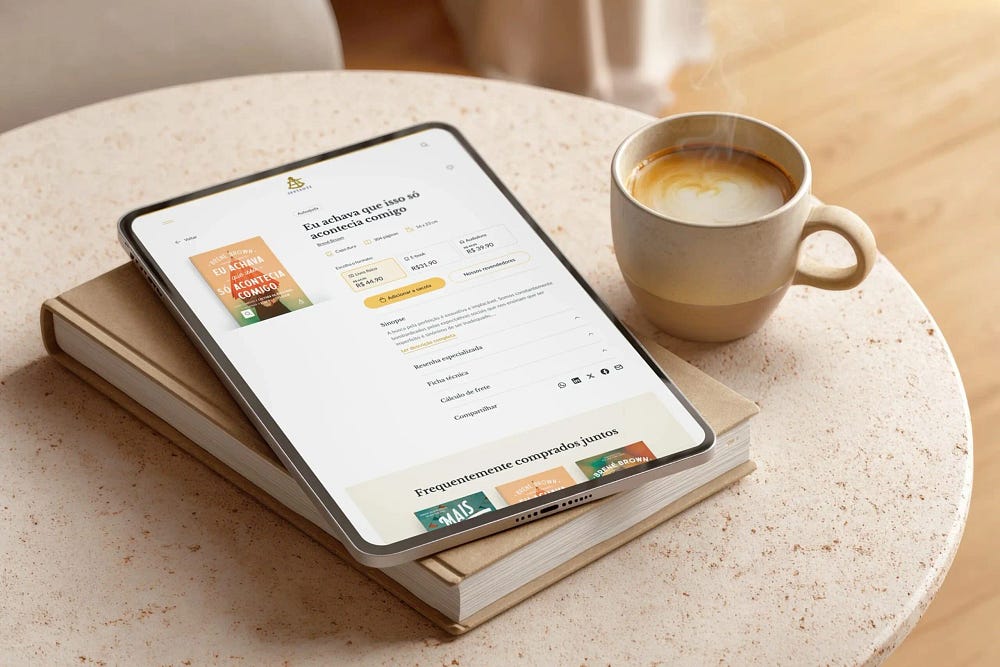
We translated this to digital through the bookshelf metaphor: books visually aligned along the viewport, multiple navigation paths (author, category, format, editorial curation) instead of forced hierarchies, preservation of cover art as the primary element.
This means the user should feel Sextante’s “climate” (calm, reflection, growth) while also being able to find, explore, and purchase books intuitively. The interface balances conversion with cultural expression. It goes beyond optimized checkout flow. It’s an experience that respects brand identity and the reader’s state of mind.
What changed after the site went live
The site launched a few months ago. We don’t yet have consolidated quantitative metrics, but the qualitative signals are clear.
Sextante’s editorial team now updates content independently. Releases, pre-orders, thematic lists, author highlights: all of this happens without opening developer tickets. Catalog update time dropped drastically with automated bulk import.
Internal feedback was positive. The platform balanced ease of use for non-technical team with maintenance of design quality. And critically: Sextante has a modern site working now, while solving D2C logistics at their own pace, without artificial pressure of “the site is ready, we need to sell now.”
When they’re ready (with warehousing, fulfillment, customer service structured), they activate e-commerce with a configuration. Without rebuilding anything. Without hiring again. The architecture is already there, tested and waiting.
For whom this approach makes sense
This project demonstrates the type of work where Reino Studio differentiates itself. But understanding when it makes sense to work with us (and when other approaches might be better) helps ensure we’re solving the right problem, the right way.
Reino works best when:
You have strategic tensions to resolve: For example: “we need to modernize digital, but our operation doesn’t yet support the new business model.” Or: “we want autonomy, but can’t risk brand degradation.” Or: “we need to scale, but don’t know which platform supports our future evolution.” If you’re navigating complex trade-offs, Reino can help think through architecture that solves multiple objectives simultaneously.
You value interface as identity expression: If you believe the digital experience should communicate who you are (if design is part of your value proposition), then Reino Studio makes sense. If your goal is purely to maximize immediate conversion and you don’t care about atmosphere or personality, we can work together, but it might be more efficient to start with a rapid test approach and optimize later.
You want strategic partnership: Reino questions the brief. We recommend different architectures than what you asked for when that better solves the business problem. Sometimes this means suggesting starting with a template to test hypotheses, and only then investing in customization. If you want someone who thinks alongside you about the problem (not just executes specifications), we’ll probably work well together.
When we might suggest other approaches first:
When speed is the critical priority: If you need to validate a hypothesis quickly or have a specific window of opportunity, sometimes it makes more sense to start with a template or lighter solution, and evolve later. Reino can help think through long-term architecture while you use something faster in the short term.
When current budget doesn’t accommodate customization: Customization costs more than templates. Custom CMS costs more than WordPress with plugins. If your primary constraint is financial right now, we can recommend starting with a more economical approach and planning future evolution when it makes sense for the business. We don’t need to do everything at once.
When there’s still no clarity about the problem: If you’re still exploring what you need, sometimes it’s worth starting with something more flexible and generic to test, and only then investing in custom architecture when requirements are clearer. Reino can help in this discovery phase too.
The idea isn’t to close doors, but to ensure we’re building the right solution for the right moment in your business. Sometimes that means complete customization. Sometimes it means starting simpler and evolving strategically.
Lessons that transcend technology and category
Complex projects like Sextante teach lessons that go beyond specific technology or client category.
Good architecture unlocks business strategy. The decision to build dormant e-commerce seems small, but it was the difference between “we need to wait 2 years for a new site” and “we launch now and activate sales when we’re ready.” This decision represents business model consulting disguised as technical architecture.
The tension between autonomy and quality is real, and templates alone don’t solve it. You can solve it by giving “total control” (which results in visual degradation) or “zero control” (which results in eternal dependency). The solution comes from well-designed modular systems that channel autonomy within structures that protect quality. It’s harder to build, but it’s the only sustainable solution.
Interface works as both tool and cultural artifact. Brands that understand this (that design communicates values, that digital experience is part of identity) create digital products that people remember and recommend. Brands that treat sites merely as “sales channels” create generic, forgettable experiences.
The best time to build infrastructure is before you need it. Sextante doesn’t need active e-commerce today. But when they do need it (and inevitably will, because every brand is moving toward direct customer relationships), the infrastructure will already be there, tested and ready. This represents long-term thinking, different from short-term-only optimization.
For publishers navigating the transition to direct relationships
If you’re a publisher, editorial brand, or any business oriented around complex catalogs and curation, and you’re navigating the transition from traditional models (wholesale, B2B2C) to direct customer relationships (D2C, subscription, community), this project offers a model for thinking about digital architecture.
Think less about “we need a new site.” Think more about: “we need a platform that gives us operational autonomy today and prepares us for a different business model tomorrow, without one blocking the other.”
It’s about building the right foundation. Choosing the right battles. Protecting what matters (identity, quality) while creating flexibility where you need it (operations, content). And having partners who understand that success goes beyond a beautiful site. Success means solving the business problem behind the request for a beautiful site.
Reino Studio has worked with brands navigating these transitions for 12 years, translating strategic tensions into product architecture. If you’re facing dilemmas similar to Sextante’s, we can talk about how to structure your digital platform.
— Pedro A. Brêtas, Creative Director & Co-founder, Reino Studio
Reino Studio
Website: reinostudio.com.br
Complete case: reinostudio.com.br/works/574
Editora Sextante
Website: sextante.com.br