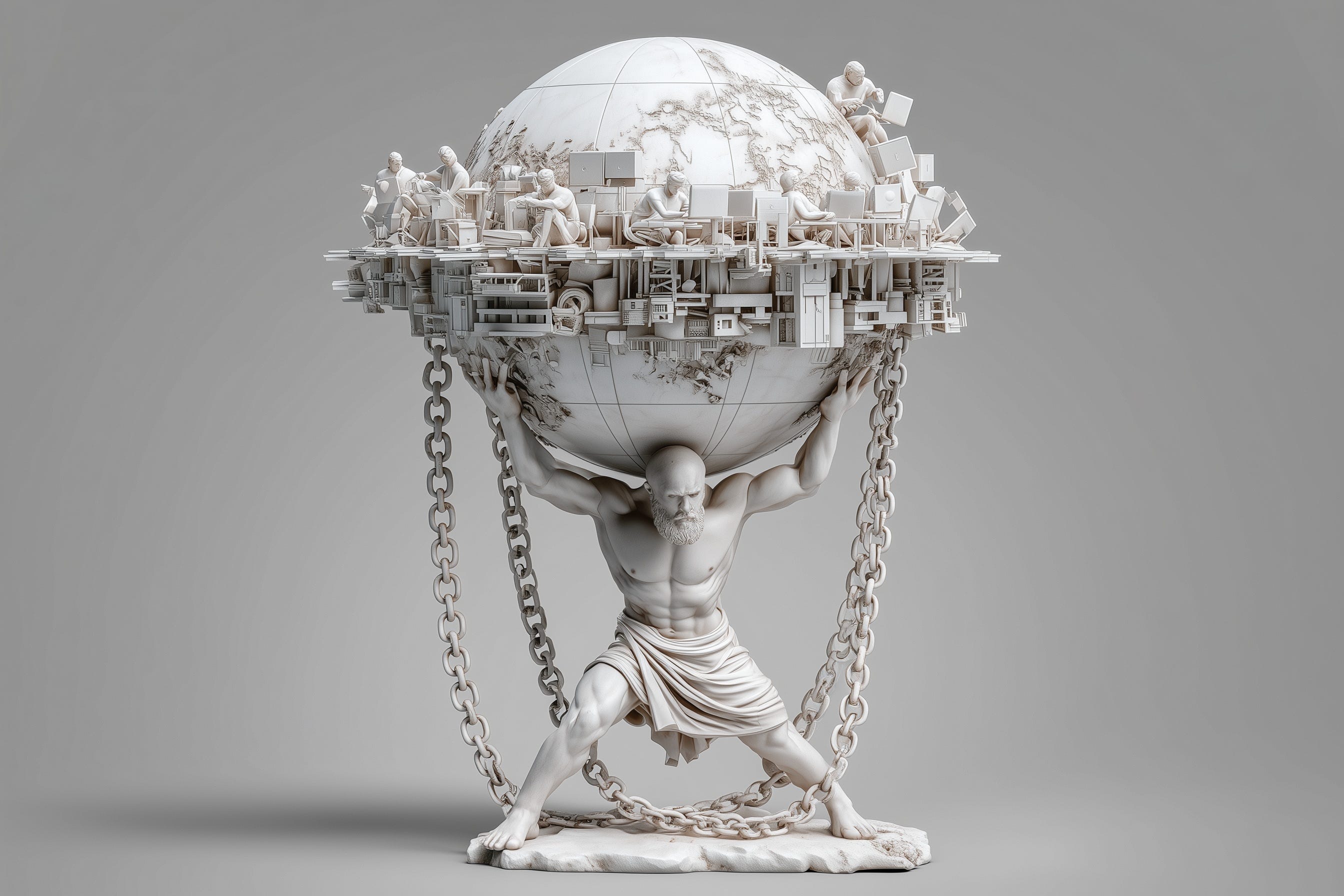
If you’ve ever tried to take a vacation and spent it checking emails, or found yourself lying awake at 2 AM wondering if a client payment will come through, you already know the truth most people don’t talk about. Twelve years ago, I stopped being a designer who dabbled in entrepreneurship and became an entrepreneur who happens to do design. Here’s what nobody puts on LinkedIn motivational posts: entrepreneurs really can’t switch off.
The toxic gospel of “always on”
We live in an era where entrepreneurship is packaged and sold through bite-sized inspiration: “Entrepreneurs don’t sleep!” “Stay hungry!” “While you’re dreaming, your competitor is scheming!” This toxic folklore sells a distorted image of what it actually means to build something from scratch.
The reality? Work-life boundaries simply evaporate. There’s no clean separation between “on” and “off” when everything depends on you.
The glamorous early days
Let me paint you a picture of those romantic startup beginnings. I was literally carrying water bottles to the office because our commercial space didn’t have a filter. Sometimes we’d frantically clean before client visits, because apparently “CEO” also means “emergency janitor.” As my business partner says: “If we need to, we’ll flip burgers.”
The operational chaos is exhausting, but it’s not what keeps you wired. It’s the endless questions: Will we close that client? Is that payment coming? Will the freelance developer deliver on time, or am I about to disappoint someone? These thoughts follow you everywhere, making themselves comfortable in your head like unwelcome houseguests.
Growing up (sort of)
Fast-forward twelve years: I now have a team, structure, delegated responsibilities. By all logic, I should be sleeping peacefully, right?
Wrong. Even with all the operational chaos sorted out, my mind refuses to shift into neutral gear. So naturally, I’m launching a second company focused on mental health and AI. The irony isn’t lost on me, starting a mental health venture while questioning my own mental choices. It’s like finally learning to swim, then voluntarily diving into deeper, stormier waters.
The mental health numbers
Here’s a sobering reality check: 94.1% of founders face mental health challenges: 85.6% anxiety, 37% burnout, 21% depression. So much for the freedom we thought we were buying. These numbers reveal the dark side of being your own boss: sometimes the cruelest employer you’ll ever have is yourself.
Even with a naturally calm temperament, I have sleepless nights. For four years straight, I didn’t take a single vacation — like driving on a spare tire, wondering why the ride felt so bumpy.
So why do we choose this path, knowing the costs?
Why we volunteer for this?
The obvious answer is freedom, being captain of your own ship. But there’s something deeper, something almost addictive about the weight of possibility. As an entrepreneur, especially starting without significant backing, you’re thrust into roles you’re completely unprepared for. You become vulnerable in ways you never imagined, carrying more weight than feels comfortable, even when you know that success or failure depends on countless factors beyond your control.
Maybe it’s the intoxicating rush of building something from nothing. Maybe it’s the knowledge that every decision, good or bad, is authentically yours. There’s a purity in that responsibility that employment can never offer, even when it costs your work-life balance.
Yet there’s something almost mythological about voluntarily placing yourself in Atlas’s position, the Greek titan condemned to carry the heavens on his shoulders for eternity. We choose to carry this weight.
The paradox? This “freedom” comes with its own chains. You still have clients to please, markets to satisfy, forces you can’t control that can derail everything. What makes it different: you chose to enter this arena. And somehow, that choice, even when it leads to sleepless nights, feels more authentic than suffering in a system designed by others.
We’re drawn to this exhausting, beautiful chaos because it allows us to show up as ourselves — flawed, vulnerable, and betting everything on our ability to navigate uncertainty rather than control outcomes.
The truth is, when you choose to climb higher, the wind will hit harder.
That’s the price of the freedom to create your own path, and if you accept it, you have to find your own way to breathe along the climb.
To continue the dialogue
Thank you for accompanying me in this reflection. This text is part of an ongoing investigation into design, creativy, AI, and narrative that overflows into practice at my studio and in the tools I build. If these ideas resonated, I’d love to continue the conversation.
Where to find me: Pedro Brêtas and pedro@reinostudio.com
Projects: Reino Studio and Fale com Amia